
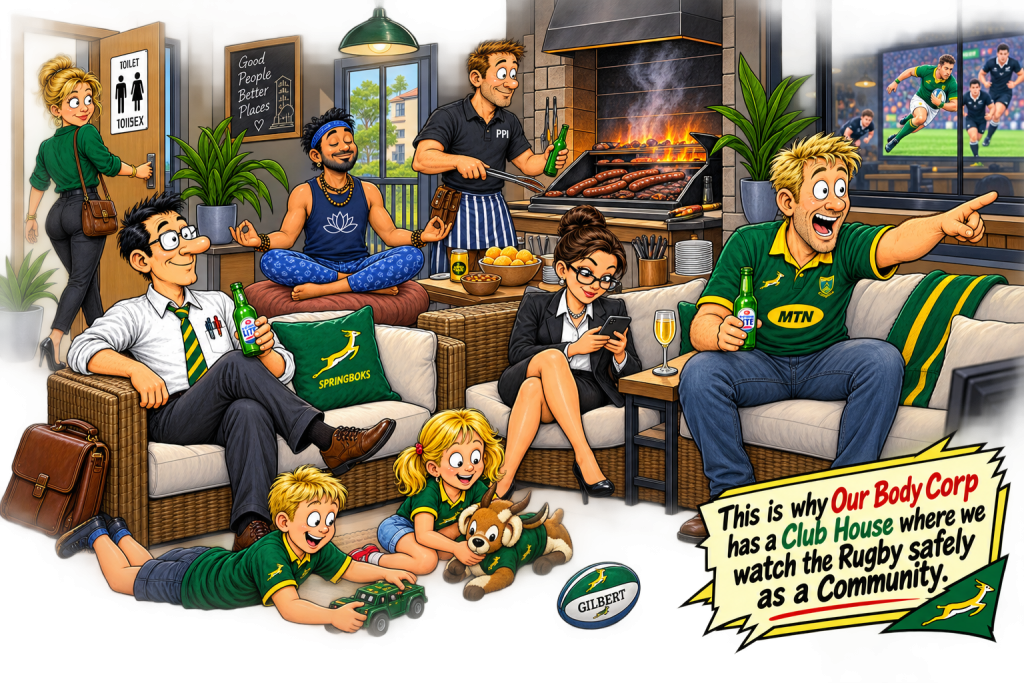
There is often some confusion around what are considered to be Components of the 10-year MRR plan and what are Major Capital Items and whether you should include various Components in your 10-year MRR plan, even though you have all the Major Capital Items.
It is useful to think of the Major Capital Items as a category of maintenance, repair and replacement items.
In the Management Rules 2(l) there is a list of eleven (11) Major Capital Items of which it lists Interior and Exterior Painting and Waterproofing as one such Major Capital Item. This is clearly a category of maintenance, repair and replacement (MRR) that needs to be undertaken by the body corporate. There are a number of components in a building that will need to be painted. These are not limited to vertical and horizontal walls; fascia and barge boards; ceilings and soffits; wooden windows and doors; mildsteel palisade and gates; parking lines and traffic markings, etc. There is debate as to whether or not each of these components should be listed separately when creating your 10-year MRR plan. There are advantages in doing this, especially in the year of your redecoration because each component has technically details linked to it which is useful when calling for quotations.
The OBC platform includes the eleven (11) Major Capital Items listed in the act, plus we have amended the category for roadways and paving to also include gardens and landscaping and have added another to make it a dozen categories of Major Capital Items, namely External Envelope, Masonry & Fenestration. You can imagine that wooden windows, besides needing to be painted from time-to-time, would also form part of the fenestration of a building and may need to be replaced by the Body Corporate or by the owners (in which case the Body Corporate would share in half of the cost). Windows as a component that might appear under two Major Capital Item categories and have two sets of funds collected for it – generally most components would fall under one Major Capital Item, but might have preventative maintenance and routine maintenance assigned to it.
It might be that the legislators did not envisage that landscaping and gardening would be a major capital item and could simply be provided for in the
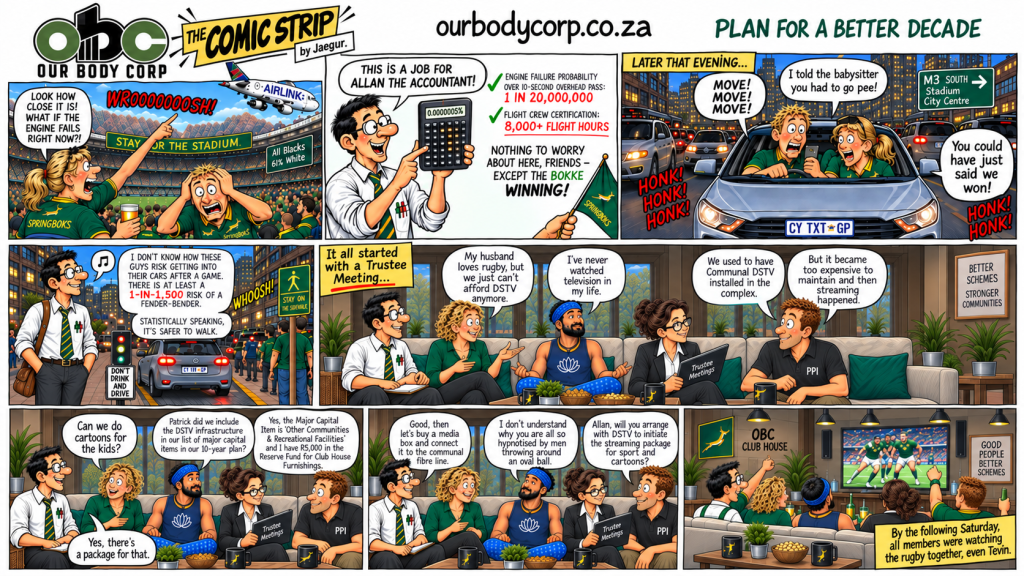
The 10-year MRR Plan is not just about collecting a lump-sum to put into the Reserve Fund, but the amount in the Reserve Fund needs to allocated across each Major Capital Item category. If maintenance, repair or replacement of a Component of a Major Capital Item category is necessary, then the Trustees can utilise funds from the Reserve Fund for this purpose. However, they may not use funds that have been reserved for use toward another Major Capital Item category.
The cartoon above illustrates an actual use case of a Body Corporate that had created a component for Club House Furnishings and had allocated a very small amount of funds there that could be used for the replacement of their old satellite system. This illustrate why it is advantageous to consider all components that fall within a Major Capital Item category.